As I continue to play Dys4ia, I think it is important to look at the actual playability of the game. The graphics and controls are very simple within themselves, using just the four arrow keys to control the series of events. As you can see below, the pixelated style of the game is not very complex, but is still engaging.
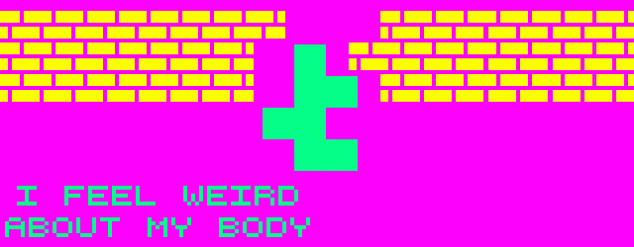
The bright colors used throughout the game make the images more enticing to the player. I think this is interesting, since we are often accustomed to thinking a “good” video game has amazing and realistic graphics. Dys4ia definitely does not have this quality, but the colors and creative use of “old style” pixelation accomplishes what it needs to in informing the player of Anna Anthropy’s story.
Also, the simplicity of the game could allude to some deeper meaning. For example, the pixelation distorts some images, possibly showing the unclear feelings that Anna experienced on her transitioning journey. The four simple controls are what everyone (as a human race) has to use, but Anna’s experience in using and navigating with those controls was especially different from everyone else.
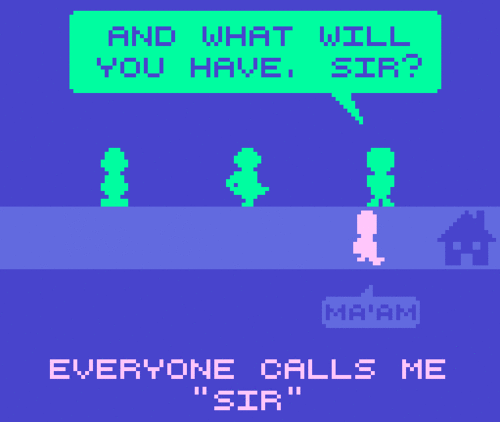
Although the game itself is easy to play and figure out how to use, the content is obviously not simple. The game is a story of Anna’s life, and it touches on some very emotional (and possibly controversial) topics. I have concluded that this is a game for an audience that is much more mature than a school aged group of children. However, it would be a wonderful game to use in teaching inclusivity of gender identities in a workplace or other organizational setting.
 Educational Tech | Kate Brunn
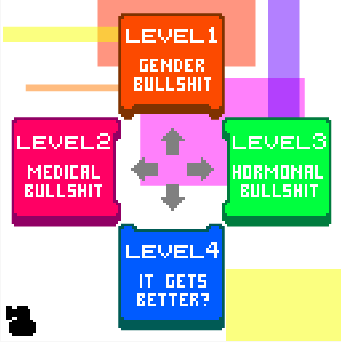
Maybe it’s nitpicky of me, but the language used in the last screenshot would also really affect my decision to use this with children. I know older students hear and see worse and I’m in no position to analyze the creator’s belief’s about the necessity of using this language, but it reflects on the game and potentially limits its audience.
The overall design features of the game are interesting to think about in relation to the topic at hand. The choice of pixilation (if indeed, it was a choice), the choice of representations, etc. are all potentially informative. I appreciate how you’ve considered these matters in the context of your review.
LikeLike